
📙 How Learning Python at Pro Young Edu Supports IGCSE Computer Science Success
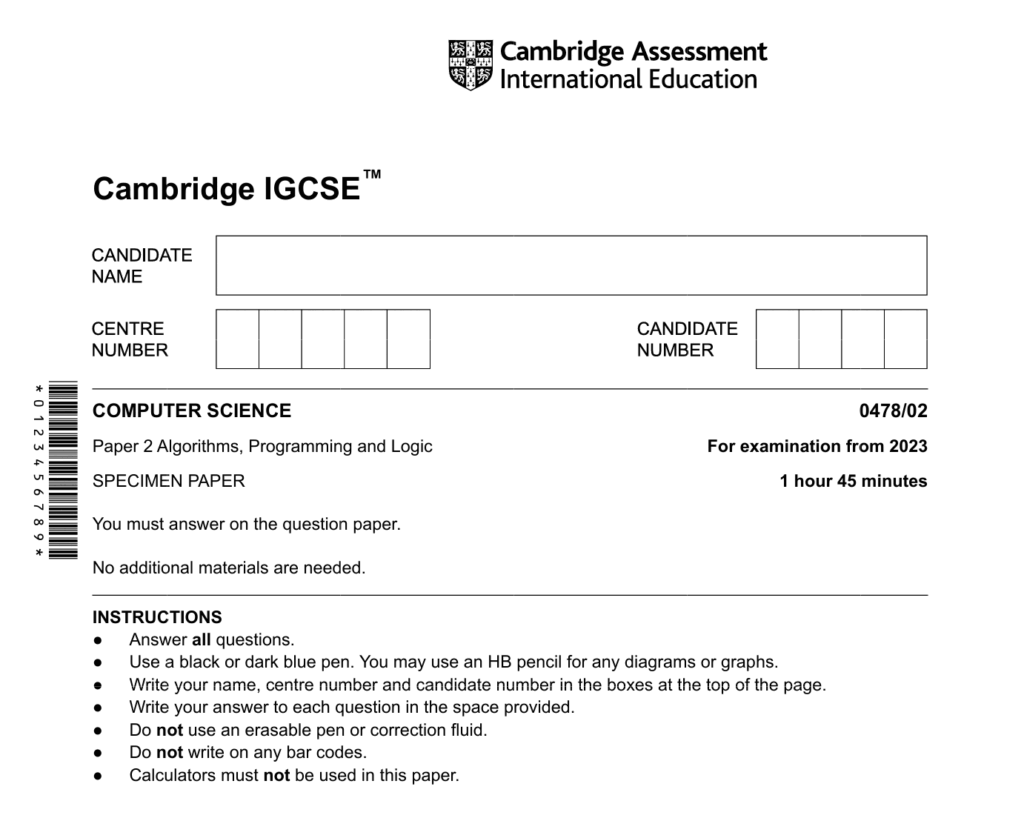
Learning Python serves as an exceptional bridge for students preparing for the Cambridge IGCSE Computer Science (Syllabus 0478), particularly for the highly challenging Paper 2 (Algorithms, Programming and Logic).
While the IGCSE examination heavily features standard Cambridge Pseudocode, studying a real-world, high-level language like Python transforms abstract exam concepts into concrete, practical skills. Here is exactly how a strong foundation in Python directly translates into IGCSE academic success.
1. Demystifying Cambridge Pseudocode Through Python Syntax
One of the biggest hurdles for IGCSE students is reading and writing Pseudocode under exam conditions. Because Python’s syntax is famously clean, readable, and relies on plain English terms, it matches Cambridge Pseudocode almost line-for-line.
When a student learns conditional blocks or loops in Python, they are simultaneously mastering the logic required for the exam:
| Programming Concept | Python Syntax 🐍 | Cambridge Pseudocode 📝 |
| Conditional Logic | if age >= 16:
print(“Pass”) |
IF age >= 16
THEN PRINT “Pass” ENDIF |
| Definite Iteration | for i in range(10):
print(i) |
FOR i $\leftarrow$ 0 TO 9
PRINT i NEXT i |
| Indefinite Iteration | while score < 50:
play_game() |
WHILE score < 50 DO
CALL play_game() ENDWHILE |
By running actual code in an interactive Python environment first, students get instant feedback when they make logical errors. They learn why an infinite loop happens or why an index error occurs, making the static pseudocode on an exam paper much easier to visualize and debug.
2. Conquering the 15-Mark Scenario Question
The final question of Paper 2 is a major 15-mark scenario-based challenge where students must design a complete algorithm from scratch to solve a complex real-world problem.
- The Rule: Cambridge regulations explicitly permit students to write their answer in a high-level programming language like Python instead of standard Pseudocode if they prefer.
- The Advantage: Writing the solution in Python minimizes the risk of making up incorrect pseudocode syntax. Because students spend hours writing, debugging, and structuring clean Python programs, tackling a 15-mark structured programming challenge becomes second nature rather than a daunting test requirement.
3. Mastering Data Structures and Array Manipulation
Paper 2 requires a thorough understanding of data types, variables, constants, and one-dimensional (1D) arrays.
- In a standard textbook, learning how to store, search, and update lists of data on paper can feel intensely abstract.
- In Python classes, students interactively build search algorithms, find maximum/minimum values in a collection, and manipulate indices. Once a student has physically coded a program that loops through an array to find a specific item, filling out an IGCSE Trace Table or dry-running a tracking algorithm becomes straightforward.
4. Shifting from Syntax Stress to Computational Thinking
When students jump straight into IGCSE preparation without prior coding exposure, they waste valuable energy stressing over punctuation, brackets, and keyword spelling.
Learning Python early builds a student’s core computational thinking skills:
- Decomposition: Breaking a massive exam problem down into small, programmable steps.
- Pattern Recognition: Identifying when to use a FOR loop versus a WHILE loop based on the exam prompt.
- Algorithm Design: Conceptualizing the logical flow of data before putting pen to paper.
📙 趣学 Python 编程:如何完美助力 IGCSE 计算机科学考试?
在 Pro Young Edu 学习 Python 编程,是学生迎战 剑桥 IGCSE 计算机科学(科目代码 0478) 的一条绝佳捷径,尤其是针对难度极高的 第二卷(算法、编程与逻辑,Paper 2)。
虽然 IGCSE 考试在纸卷上主要采用剑桥官方规范的伪代码(Pseudocode)进行考察,但提前系统地学习一门真实的、高阶的 Python 语言,能将考卷上抽象枯燥的理论瞬间转化为看得见、摸得着的实操技能。以下是 Python 基础能够直接转化为 IGCSE 高分优势的核心所在:
1. 语法高度对齐:用 Python 轻松拆解剑桥伪代码
对许多 IGCSE 考生而言,在限时的高压考场上阅读和书写伪代码是一大难关。由于 Python 的语法以简洁、易读、贴近日常英语而闻名,它与剑桥官方伪代码几乎可以做到“逐行对齐”。
当孩子在 Python 课堂上掌握了条件判断和循环结构时,他们其实已经同步吃透了考试所需的底层逻辑:
| 编程核心概念 | Python 语法 🐍 | 剑桥官方伪代码 📝 |
| 条件分支逻辑 | if age >= 16:
print(“Pass”) |
IF age >= 16
THEN PRINT “Pass” ENDIF |
| 确定次数循环 | for i in range(10):
print(i) |
FOR i $\leftarrow$ 0 TO 9
PRINT i NEXT i |
| 不确定次数循环 | while score < 50:
play_game() |
WHILE score < 50 DO
CALL play_game() ENDWHILE |
通过在代码编辑器里运行真实的 Python 程序,孩子能获得即时的报错反馈。他们能清晰地在实操中明白为什么会产生死循环、为什么索引会越界。这种直观的肌肉记忆,能让纸卷上静止的伪代码在他们脑海中“活”起来。
2. 稳拿大分:降维打击 15 分情境大题
第二卷的压轴戏是一个分值高达 15 分的情境应用大题,要求学生从零开始设计一个完整的算法来解决复杂的业务逻辑。
- 官方规则: 剑桥官方大纲明确允许,如果考生愿意,可以直接使用 Python 等高级编程语言来书写该题的答案,而不强制要求写伪代码。
- 降维优势: 熟练编写 Python 可以完美规避因生搬硬套伪代码格式而导致的无谓失分。因为孩子们在日常训练中已经历过大量编写、调试真实 Python 程序的磨练,面对这道 15 分的程序设计题时,他们能够像真正的软件工程师一样沉着应对。
3. 攻克核心数据结构:一维数组的玩转与推演
第二卷要求学生必须彻底掌握数据类型、变量、常量以及 一维数组(1D Arrays) 的操作。
- 仅仅看教科书,在纸上手写数据的存储、检索和更新,会让人感到极度抽象。
- 在 Python 的实战课中,学生们会亲自编写查找算法、找出序列中的最大/最小值、操作列表索引。一旦孩子在电脑上亲手实现过遍历数组、筛选数据的逻辑,回过头来填写 IGCSE 必考的 追踪表(Trace Tables) 时,就会变得犹如顺藤摸瓜般简单。
4. 摆脱死记硬背,聚焦“计算思维”的培养
如果学生在没有任何编程经验的情况下直接死啃 IGCSE 大纲,他们往往会把大量的精力浪费在死记硬背标点符号、括号格式和关键字拼写上。
提早接触 Python 能帮助孩子跳过低效的“语法焦虑”,直击核心的计算思维(Computational Thinking):
- 问题拆解 (Decomposition): 面对庞大的考试主观题,知道如何将其拆解为一个个可控的、模块化的编程小步骤。
- 模式识别 (Pattern Recognition): 看到题目要求的边界条件,能瞬间判断该使用 FOR 循环还是 WHILE 循环。
- 算法设计 (Algorithm Design): 在下笔答题前,脑海中就已经构建好清晰、严密的数据流动逻辑。
在 Pro Young Edu Service,我们的 Python 课程绝不只是教孩子们机械地抄写代码,而是聚焦于培养解决问题的底层架构思维。让孩子提早建立起逻辑推演与独立调试的自信,当他们未来面对学术要求严苛的 IGCSE 计算机科学大纲时,他们将不再是死记硬背参考答案的应试者,而是真正具备科技视野的创作者。
PAST YEAR PAPER 历年考卷: –
